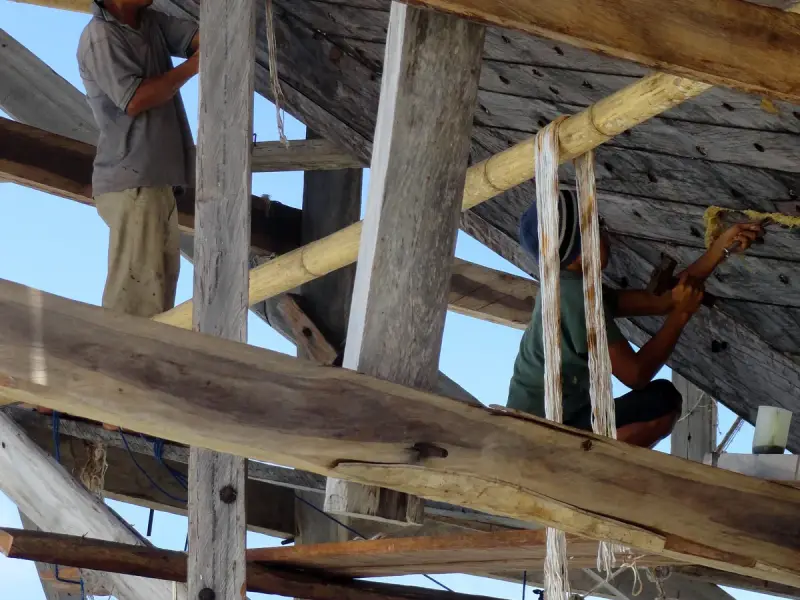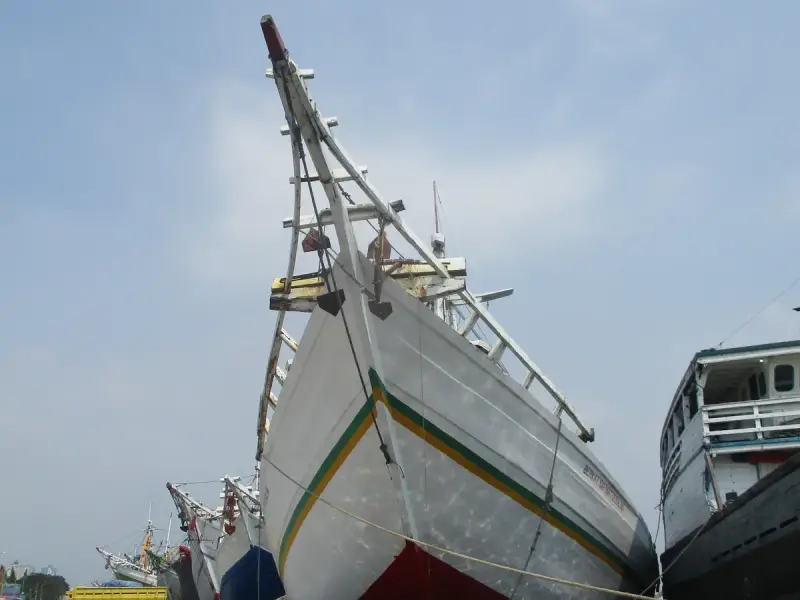
From the outside a phinisi is timber and tradition. Below decks it is a modern vessel, and it has to be: guests expect cold food, hot showers, air-conditioning and clean power, and a dive liveaboard expects all of that plus compressors, running for a week in a remote anchorage. Fitting these systems cleanly into a wooden hull is a real engineering discipline.
Engine, shaft and propeller
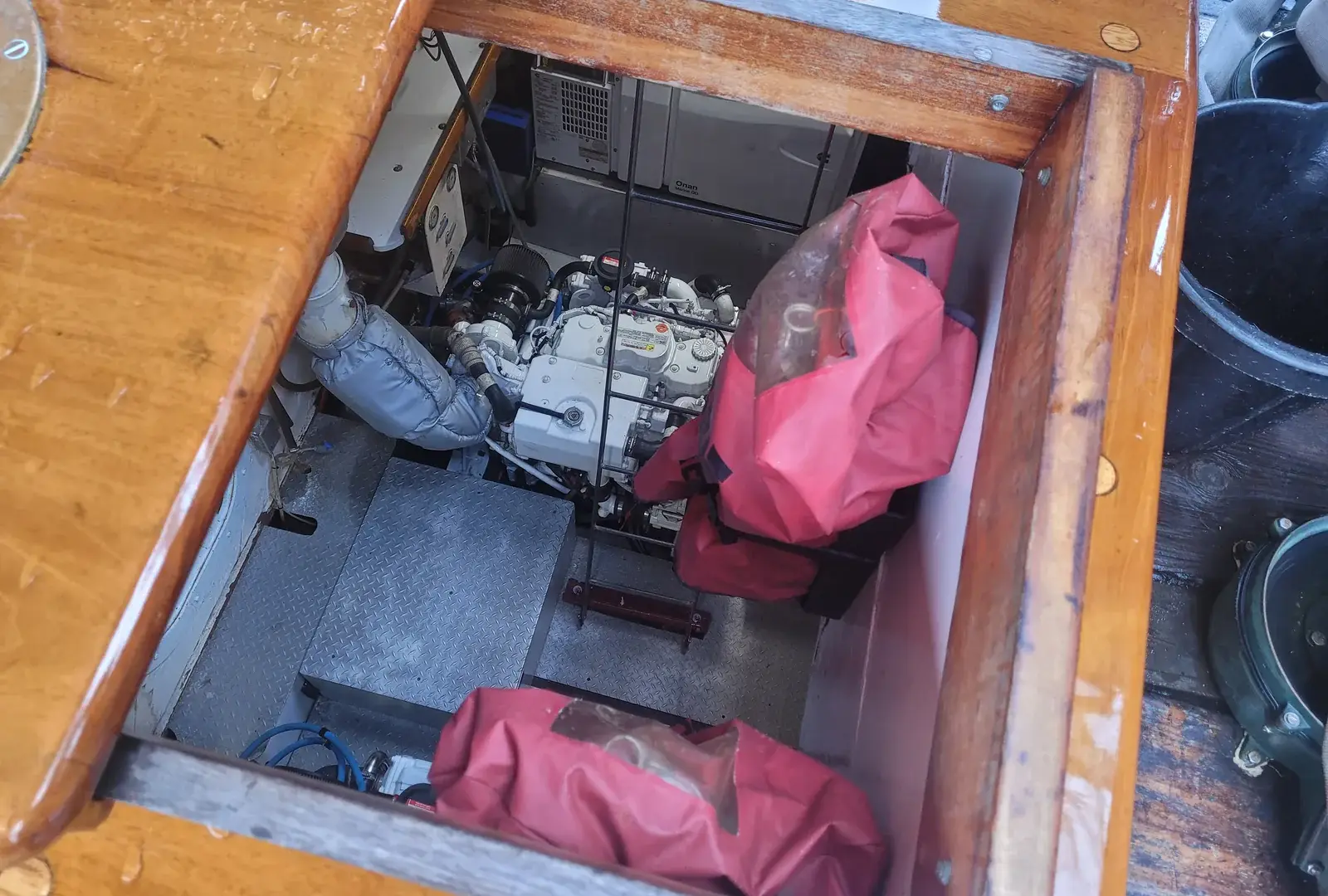
The main engine sits on a fabricated bed tied into the hull structure — not simply bolted to planking. The shaft is aligned to the coupling, the propeller sized to engine and hull, and the rudder and steering gear matched to the whole. Vibration and alignment are checked carefully, because a wooden hull transmits and is stressed by both. The systems page covers this in full.
Tankage and water
Fuel and fresh-water tanks are sized against the longest legs the vessel will run. A reverse-osmosis watermaker gives real autonomy so the boat is not tied to a dock, and grey- and black-water systems meet discharge rules — essential inside national parks. Tank placement also affects trim and stability , so it is designed, not improvised.
Power: generators, batteries, solar
Power on a liveaboard is a system, not a single machine. Diesel generators carry the hotel and dive load; a battery bank and inverter give silent overnight power; solar panels cut generator hours. Redundancy on the generators matters, because losing power on day six of a charter is not an option. The whole electrical system is specified clean, labelled and accessible.
Access is everything
The mark of good marine engineering is not how it looks new, but how easily it can be fixed at sea. Beds, mounts and runs are laid out so a crew can reach and service them. A system you cannot reach is a system you cannot repair — and on a remote itinerary, that is the difference between an inconvenience and an emergency.
Bonding, grounding and the wooden hull
A timber hull does not conduct like a steel one, so electrical bonding and grounding are engineered deliberately to protect against corrosion and stray current. Done poorly, stray current can eat fastenings and fittings from within; done well, it is invisible. It is one of the specialist details that separates a properly engineered systems installation from an amateur one.
Commissioning the systems
Installing a system is not the same as proving it. Every system is commissioned — run, adjusted and tested under load — before the sea trial , so faults are found and fixed at the dock rather than a week into a charter. Thorough commissioning is unglamorous and exactly what keeps a boat reliable.